Jaipur: The Rajasthan OBC Commission’s recently submitted caste-wise survey has brought fresh demographic data into the state’s political and social debate, with the report documenting the population and socio-economic conditions of 92 OBC communities.
Among the figures highlighted in reports on the survey, the Jat community has been recorded at approximately 71.76 lakh, while the Gurjar community has a population of more than 32 lakh. The findings are significant because Rajasthan has historically lacked detailed, contemporary caste-wise population data comparable to the information now compiled by the state commission.
The Commission surveyed OBC communities using multiple social, economic and political indicators. Its findings also examine the extent to which different communities have been represented in electoral politics and public institutions. According to reporting on the Commission's conclusions, only a limited number of the 92 communities have achieved substantial political representation.
The report has particular importance ahead of Rajasthan’s upcoming Panchayati Raj and urban local-body elections. The Commission was tasked with generating empirical evidence that could help determine OBC representation in local government while taking into account the Supreme Court’s requirements for reservation in local bodies.
The Commission has recommended that reservation should not be assessed solely on population figures. Social, economic and political backwardness should also be considered while determining representation for individual communities, according to reporting on the report.
The findings could therefore have consequences beyond simple population counting. Rajasthan’s OBC category includes communities with widely differing demographic sizes, economic conditions and levels of political representation. The new data may intensify discussions over whether the benefits of existing reservation arrangements are distributed proportionately among the various communities.
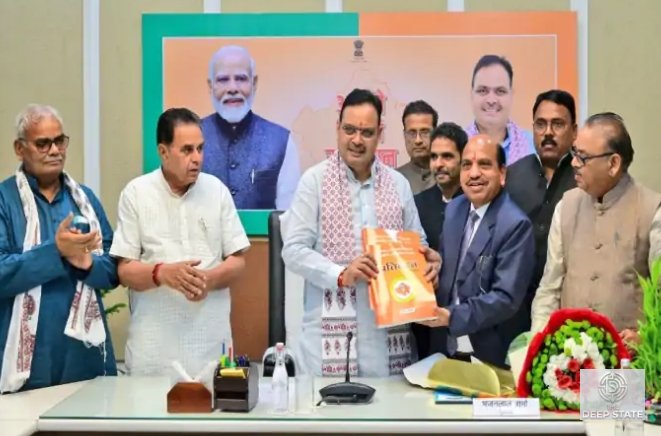
The report was submitted to Chief Minister Bhajan Lal Sharma in a detailed, multi-volume document. Reports have described it as running to nearly 900 pages, containing demographic, socio-economic and political findings from the survey.
With local-body elections approaching, the caste-wise data is likely to become an important reference point for political parties, community organisations and policymakers. It could also influence the debate over how OBC seats should be allocated across Rajasthan’s municipalities and Panchayati Raj institutions.
For Rajasthan’s political landscape, the significance of the survey extends beyond numbers. By placing population estimates alongside indicators of representation and backwardness, the Commission’s findings could shape the next phase of the state’s reservation and electoral politics.