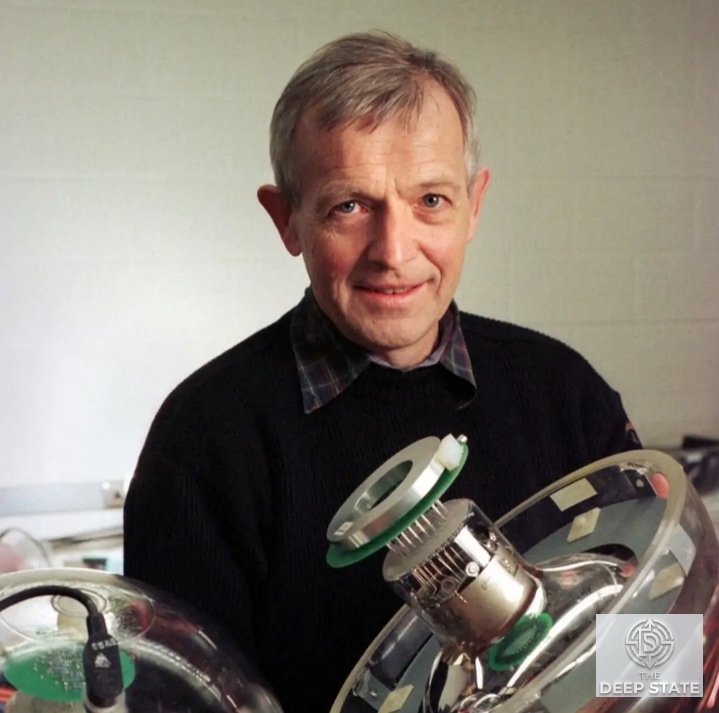
Stockholm: Belgian-American physicist Francis Halzen has been awarded the 2026 Nobel Prize in Physics for his pioneering work in detecting mysterious particles arriving from deep space and using them to explore some of the biggest mysteries of the universe.
Halzen’s work is closely linked to the IceCube Neutrino Observatory at the South Pole, one of the most remarkable scientific experiments ever built. The facility uses thousands of sensitive detectors buried deep beneath the Antarctic ice to track tiny particles known as neutrinos.
Neutrinos are sometimes called “ghost particles” because they can travel through matter almost without interacting with it. Trillions of neutrinos pass through Earth every second, yet detecting them is extremely difficult. Scientists believe these particles can carry valuable information about powerful events taking place billions of light-years away.
Halzen played a central role in turning this difficult scientific idea into reality. His efforts helped scientists use the Antarctic ice as a giant detector, allowing them to identify high-energy neutrinos coming from distant cosmic sources.
The breakthrough has opened a new way of studying the universe. Unlike ordinary light, neutrinos can travel across enormous distances without being easily blocked or changed. This means they can provide scientists with clues about violent events such as powerful cosmic explosions and other extreme phenomena.
The Nobel recognition marks a major milestone in Halzen’s long scientific career. His work has helped establish neutrino astronomy as an important new field and given researchers another way to look beyond what conventional telescopes can see.
The award also highlights how an unusual scientific idea — placing detectors deep beneath Antarctic ice — has changed our understanding of the universe.