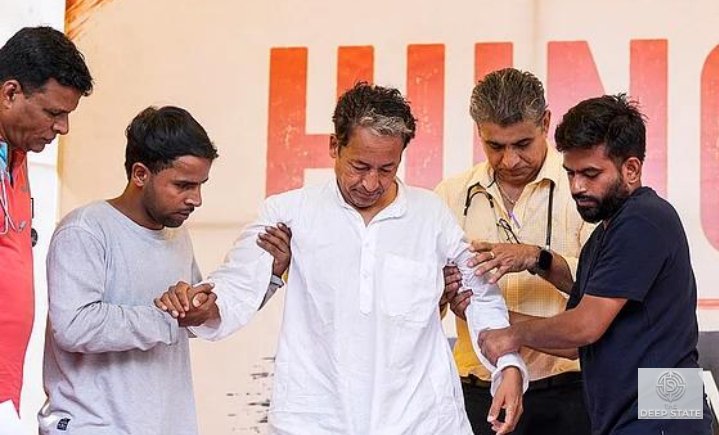
New Delhi: The legal and ethical questions surrounding activist Sonam Wangchuk's hunger strike have intensified after authorities shifted him to Safdarjung Hospital amid fears that his condition had become life-threatening. His supporters allege unlawful detention, while the government maintains that intervention was necessary to protect his life.
At the centre of the controversy is a critical constitutional question: Can the State force-feed a person on a voluntary hunger strike?
Legal experts note that Indian courts generally recognize an individual's right to bodily autonomy but have also emphasized the government's responsibility to preserve life when a person's medical condition reaches a critical stage. Rather than laying down a blanket rule permitting or prohibiting force-feeding, courts have typically required authorities to act on professional medical advice while ensuring that any intervention remains lawful, proportionate, and respectful of constitutional rights.
Recent proceedings in the Delhi High Court upheld the government's decision to transfer Wangchuk to hospital after doctors warned of deteriorating health. The court observed that the move was based on medical necessity and was not arbitrary, while continuing to seek updated medical reports on his condition.
Medical ethics experts point out that doctors must balance patient autonomy with their professional obligation to save life. If a hunger striker remains mentally competent and capable of making informed decisions, forced medical intervention becomes legally and ethically complex. However, if the patient loses decision-making capacity or faces imminent risk of death, emergency treatment may be considered under established medical protocols.
Meanwhile, Wangchuk's supporters continue to press for dialogue and have announced further demonstrations, including a planned march to Parliament. The coming days are expected to determine whether negotiations, judicial oversight, or continued medical intervention shape the next phase of the protest.