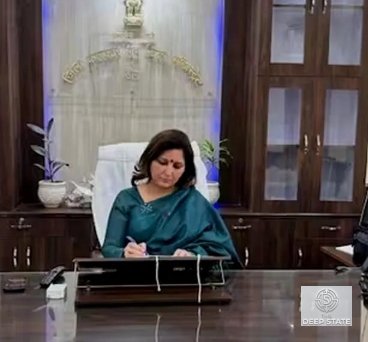
Jaipur: An account of family investments, declared income and official disclosures surrounding senior IAS officer Shikhar Agrawal, his IPS officer wife Prashakha Mathur and their family.
A closer look beyond the headlines
In classic films from the golden era of Indian cinema, there is often a scene in which the camera focuses on a magnificent palace or an imposing mansion, leaving the audience astonished by its grandeur. But when the camera moves inside, the story often reveals years of hard work, savings and financial discipline by several members of a family behind the impressive structure.
A similar perspective can be applied to the recent discussions surrounding villas and cottages registered in the names of senior Rajasthan-cadre IAS officer Shikhar Agrawal, his IPS officer wife Prashakha Mathur and their family.
At first glance, the number of properties and the figures associated with them may attract considerable attention. However, the account presented in support of the investments argues that the broader financial, legal and personal circumstances must also be considered before drawing conclusions.
Four independent earners, one family
The central argument is that the properties should not automatically be viewed as the assets of a single individual when several family members have independent sources of income and separate financial identities.
Lifetime savings of retired parents
The family's senior members—described as a retired engineer and a former college principal—are said to have invested their lifetime savings, pension income, provident fund benefits and accumulated earnings in property.
According to this account, their investments represent an effort to secure financial stability during retirement.
Sons earning in the United States
The family's two sons are described as having worked for several years in senior positions at multinational companies in the United States.
The account states that they earned in foreign currency and paid for the properties directly through their respective bank accounts.
It argues that investments made by financially independent adult children from their declared earnings should be assessed separately from the assets of their parents.
Separate financial identities
The account further maintains that each family member has separate PAN details, bank accounts and income-tax returns.
It argues that the financial position of each individual should therefore be examined independently, rather than combining all family assets and attributing them to one person.
Property disclosures and official records
Transparency in financial disclosures is a key requirement for public servants.

According to the account, Shikhar Agrawal disclosed details of investments in properties at Ajabgarh and Buzhda in Udaipur, including acquisition costs and sources of funds, through the government's immovable property return (IPR) system.
The account maintains that the properties physically acquired are also reflected in the relevant official records.
Regarding Prashakha Mathur's IPR, it attributes concerns about the presentation of documents to a technical issue involving the digital portal. It claims that the necessary documents were submitted in accordance with the rules but became linked to a different folder because of a technical discrepancy.
The account asserts that the documents remain available in government records and have been verified.
It also claims that the properties were not purchased below the applicable government-determined District Level Committee (DLC) rates and that details of the individual units and their prescribed rates are available.
These assertions concern compliance with disclosure and valuation requirements; their accuracy would need to be assessed against the relevant official records.
Rental income and the uncertainties of tourism
Income from leased properties is sometimes perceived as a fixed and dependable source of revenue. However, the hospitality and tourism industries are vulnerable to seasonal fluctuations and unexpected disruptions.
The account notes that returns can rise during peak tourist seasons but may decline sharply during downturns, as witnessed during the COVID-19 pandemic, when some resorts experienced a substantial loss of business.
It further states that income generated through the leases has been declared in official accounts and that applicable income taxes have been paid.
The extent of the rental income, its disclosure and the payment of taxes would ultimately be established through the relevant financial and tax records.
NGT proceedings concerning the Ajabgarh property
The account also refers to proceedings before the National Green Tribunal (NGT) concerning the property at Ajabgarh.
According to the narrative, the tribunal constituted a joint committee comprising senior officials from multiple departments to inspect the site and examine issues relating to construction, environmental compliance and applicable regulations.
It claims that the investigation found the relevant aspects to be compliant and that the matter was subsequently dismissed on its merits.
The precise scope and outcome of the proceedings would need to be confirmed from the tribunal's order and the committee's findings before drawing definitive conclusions about the legal status of the property.
The larger question: Transparency and accountability
The discussion surrounding the family's property investments highlights a broader issue in public life: the importance of distinguishing between allegations, documented facts and explanations offered by the individuals concerned.
The account presents the investments as the result of the declared earnings, savings and financial independence of several family members. It maintains that the transactions were documented and that the relevant disclosures, taxation requirements and regulatory obligations were fulfilled.
However, the ultimate assessment of these claims depends on documentary evidence, including property registrations, bank transactions, income-tax records, official IPR filings and the relevant NGT order.
In matters involving senior public officials, transparency requires both a fair consideration of the explanations provided and independent scrutiny of the available evidence.
The key issue, therefore, is not merely the number of properties held by a family, but whether ownership, funding sources, official disclosures and regulatory compliance can be substantiated through verifiable records.
Story credit: khaskhabar