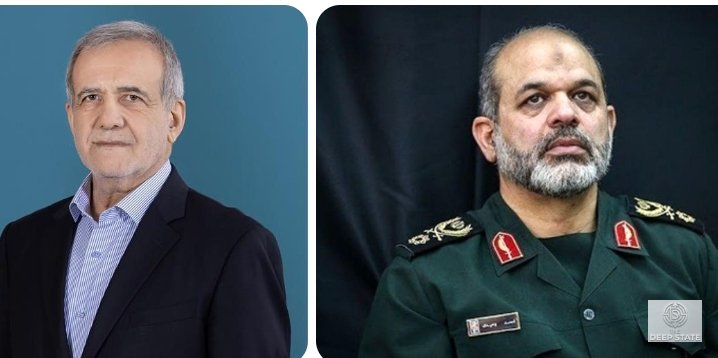
Tehran: Iran's political landscape has entered a new phase after reports indicated that President Masoud Pezeshkian's authority over national security and nuclear policy has been substantially curtailed. Strategic decisions in these critical areas are now reportedly being directed by senior military commander Ahmad Vahidi, highlighting the expanding role of Iran's security establishment in state affairs.
The reported change comes amid continuing regional tensions, international pressure over Iran's nuclear programme, and internal debates over the country's diplomatic and military strategy. Analysts believe the development reflects the growing dominance of hardline institutions over the elected civilian government.
The reported change comes amid continuing regional tensions, international pressure over Iran's nuclear programme, and internal debates over the country's diplomatic and military strategy. Analysts believe the development reflects the growing dominance of hardline institutions over the elected civilian government.
President Pezeshkian, who campaigned on promises of economic reform and diplomatic engagement, has increasingly found himself constrained by powerful security institutions. Earlier reports also suggested disagreements between his administration and military leaders over negotiations with the United States and broader foreign policy.
Observers note that Iran's Supreme Leader remains the country's highest authority, while the latest developments reinforce the influence of military commanders in shaping Tehran's strategic decisions. The evolving balance of power could affect Iran's future diplomatic initiatives, regional security posture, and nuclear negotiations.